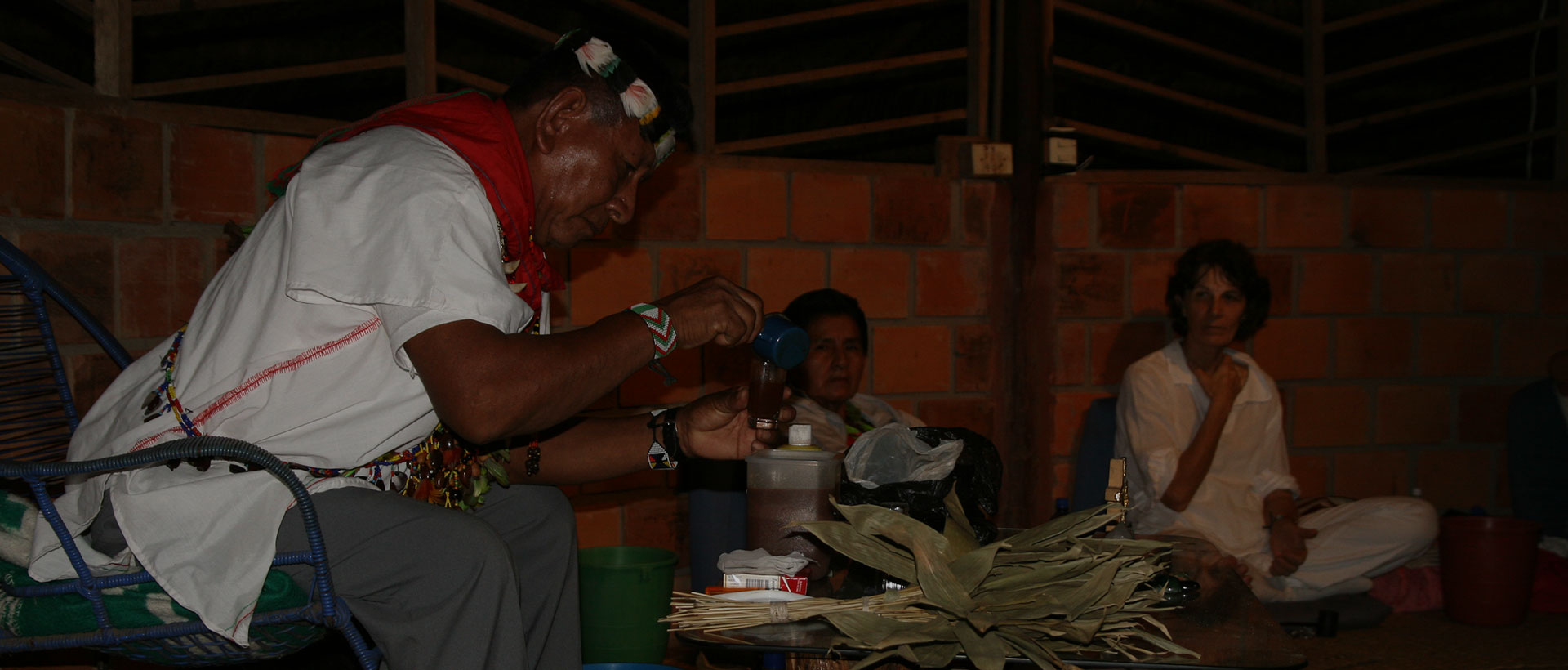
In the Amazonian tradition, traditional healing songs known as icaros are not simple melodies. Each song arises from the living relationship between the healer and the master plants, the fruit of a process of learning and communication that develops mainly during diets. The song expresses that connection and, at the same time, sustains it. When the relationship with the plant is broken, the icaro disappears. This relational dimension is what gives the song its healing power.
In this brief text we wish to share some findings and reflections on the fundamental role of icaros within therapeutic work with Amazonian medicinal plants. Through the experience of Takiwasi, we have observed how these songs constitute an essential tool for guiding, protecting, and structuring the therapeutic experience.
The language of breath and intention
The word icaro has roots in Tupi-Guarani and Quechua, where it also means “to blow smoke to heal.” This detail reveals the importance of breath and intention in the act of singing. The healer infuses vital energy into the sound, amplified by tobacco smoke, perfumes, and melody. Thus, the icaro acts as a vehicle of energy, prayer, and medicine.
During ayahuasca sessions, icaros serve the function of organizing the patient’s inner space. In amplified states of consciousness, perception becomes synesthetic: sounds, colors, emotions, and memories intertwine. In that context, the healer’s song offers a structure that allows the participant to orient themselves, process, and make sense of what emerges. Even in difficult experiences, those who manage to connect with the icaros often find learning and understanding.
It is not necessary to rationally understand the words of the song. Icaros operate at a level deeper than language: they speak to the memory of the body and the soul. We have seen cases in which a person who did not understand Quechua or Spanish nevertheless deeply internalized the message of an icaro, translating it into real changes in their life. It is as if the song spoke directly to the spirit.
Research on the experience of song
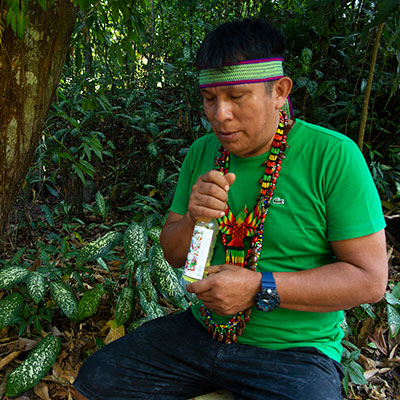
Within the framework of research conducted at Takiwasi, we analyzed patients’ responses about their experience with ayahuasca and diets. We used a phenomenological model to understand how they lived through the sessions and what role they attributed to the icaros. The results showed that, for most, the songs were an essential element of containment and guidance. Those who could not connect with them tended to report more chaotic or confusing experiences.
This study was published in the journal Anthropology of Consciousness and sparked some interest in the scientific community. Perhaps because, although there is abundant literature on ayahuasca, little attention has been paid to the musical and symbolic aspects of healing. Research on icaros may therefore provide valuable insights for the emerging field of psychedelic-assisted therapies, where music plays a central yet still poorly understood role.
The evolution of the songs
Another topic we address is the contemporary transformation of icaros. Today, modernized versions adapted to different cultural contexts can be heard. From the Amazonian perspective, what matters is not so much the musical form as the intention and the relationship from which the song is sung. An icaro is effective when it comes from an authentic relationship with the plants and with nature. If it is sung to heal, the song heals; if it is sung to entertain, its effect will be different.
Each healer imprints their own personality on the icaros, like an echo of the plant and of the human being who invokes it. That is why songs from the same tradition can vary greatly without losing their essence. This plasticity shows that music is a universal language capable of conveying healing when it arises from respect and connection.
Conclusion: icaros as a bridge between worlds
Icaros are a living manifestation of the dialogue between human beings and nature. They remind us that healing depends not only on substances or techniques, but on the quality of the relationship we establish with the world around us. Singing, listening, opening the heart: within these lies an ancestral wisdom that still has much to teach the modern world.
Healing Songs: The Healing Potential of Icaros During Ayahuasca Ceremonies
Research conducted by Owain Graham, PhD in Ethnomusicology from the University of California, Riverside, has focused on analyzing the therapeutic importance of icaros, documenting how these songs used during Ayahuasca ceremonies accompany healing experiences.